Protecting The Kw'a'luxw (Englishman River) Watershed
Protecting the The Kw’a’luxw (Englishman) River: How You Can Help
Watershed Health and You
Background
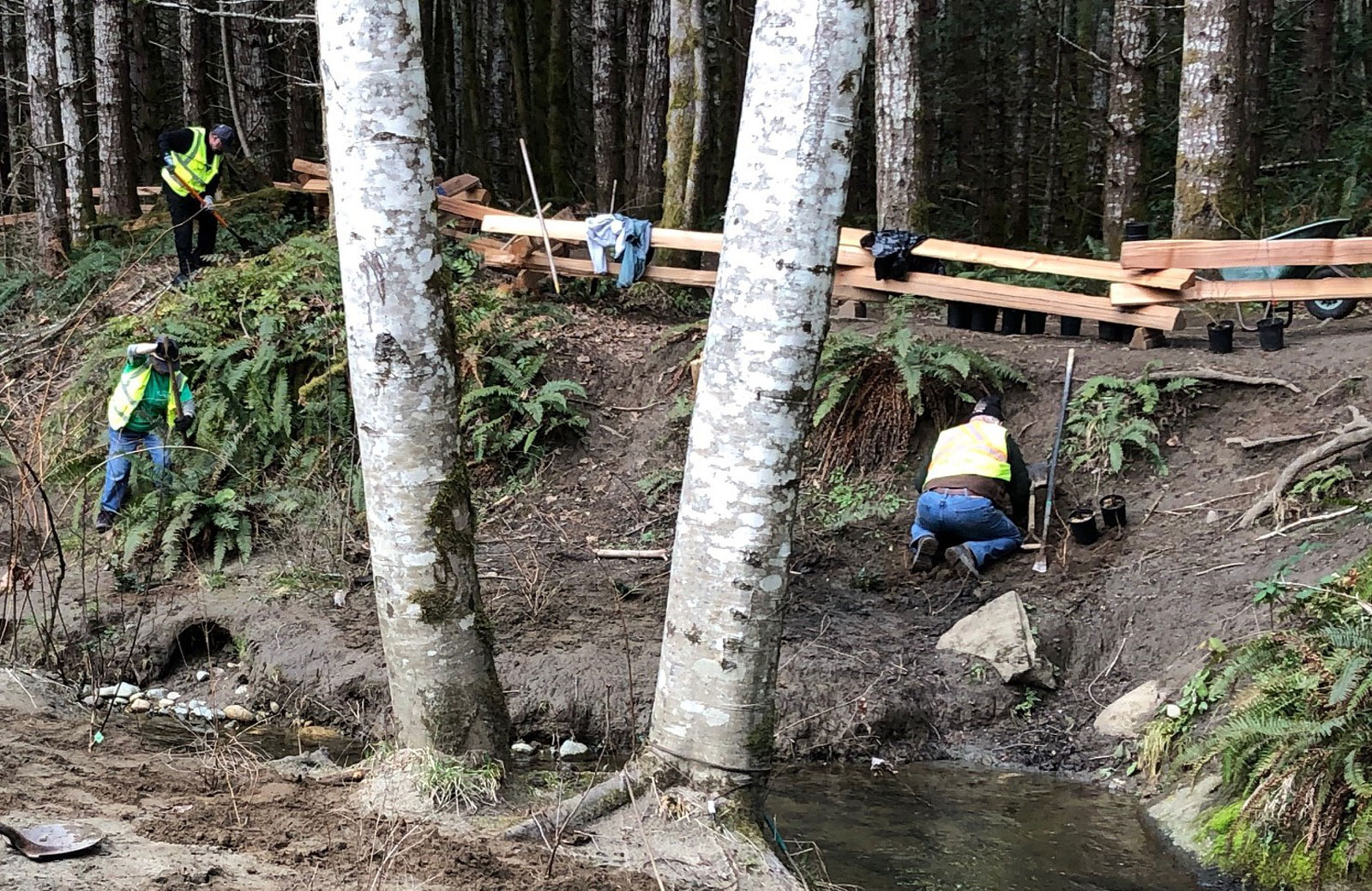
The future of the Englishman River Watershed is at a crossroads. Many reports and studies have provided a strong foundation in restoring the river’s natural features and functions but today’s challenge is to develop a framework of restoration and monitoring that will maintain the health of the watershed. Using the Englishman River Recovery Plan as a starting point, the Englishman River Watershed Health and YOU initiative aims to engage our local community in recognizing the importance of the watershed, and become involved in activities that will help to protect their own watersheds. While MVIHES is focusing on the Englishman River Watershed, any stewardship group could use some of the basics we are developing.
Activities
An assessment of the condition of the watershed was conducted by Fisheries Biologist, Dave Clough, of DR Clough Consulting. The Habitat Status Report of the ER Watershed was produced according to the guidelines in the Fisheries and Oceans Canada’s Wild Salmon Policy. From the Assessment we were able to extract a number of indicators of a healthy watershed that would be possible to be monitored by volunteers – given that they would be trained by professionals in procedures, methodology and reporting.
Community Watershed Monitoring Network
MVIHES has been monitoring water quality for over a decade under a partnership with the Regional District of Nanaimo’s (RDN) Drinking Water and Watershed Protection Program . This partnership is called the Community Watershed Monitoring Network. Our data have identified problems in some of the tributary creeks which led to action like changes in land management and habitat restoration.
MVIHES monitors nine sites in the Kw’a’luxw watershed and four sites in Lantzville and Nanoose. Monitoring is conducted on Tuesdays for five weeks in August/September, when stream flow is at its lowest and there is little dilution; and for five weeks during the fall flush when rainfall is running off the land and picking up sediment and contaminants that could end up in creeks and rivers.
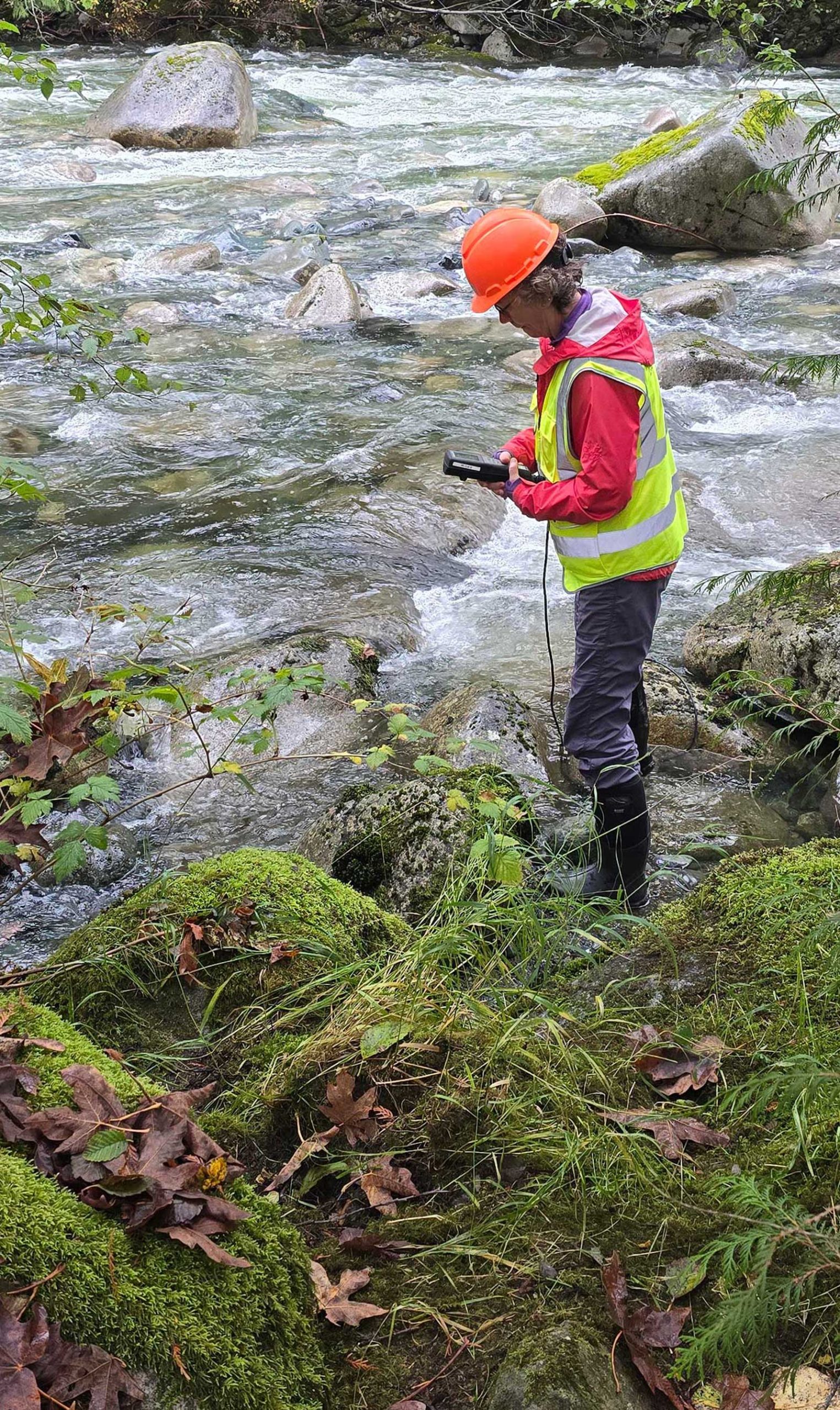
Four water quality parameters are measured using scientific meters supplied by the RDN: water temperature, dissolved oxygen concentrations, turbidity (measures the amount of solids in the water), and conductivity (measures the amount of contaminants like metals). The RDN provides training on the use of the meters and sampling protocols.
Kw’a’luxw River Water Quality Monitoring
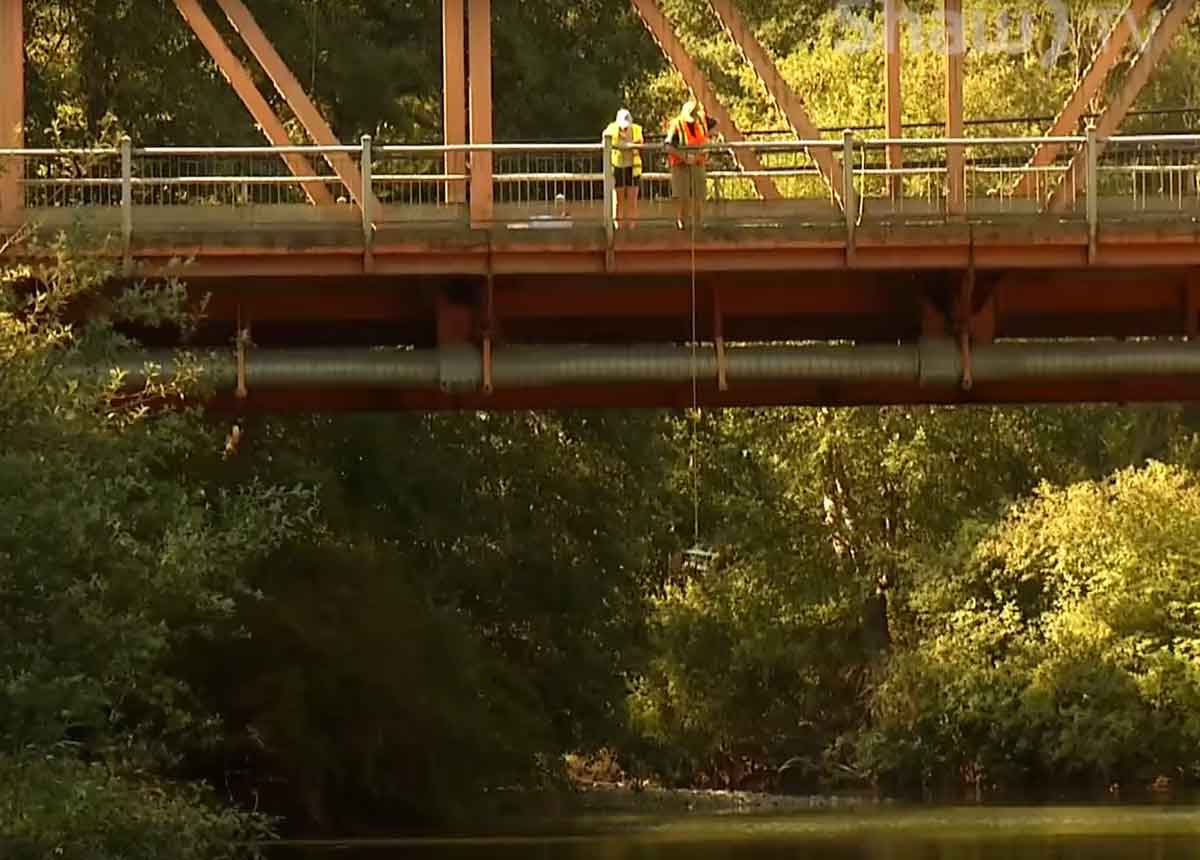
Every two weeks for over 15 years, volunteers have headed out on to the Orange Bridge in Parksville to collect water samples from the mainstem of the Kw’a’luxw on behalf of Environment Canada and Climate Change (ECCC). The objectives of this long-term freshwater quality monitoring is to assess water quality status and long-term trends, detect emerging issues, establish water quality guidelines and track the effectiveness of remedial measures and regulatory decisions.
MVIHES volunteers receive training from ECCC on sampling protocols to:
- prevent contaminating the water samples we collect,
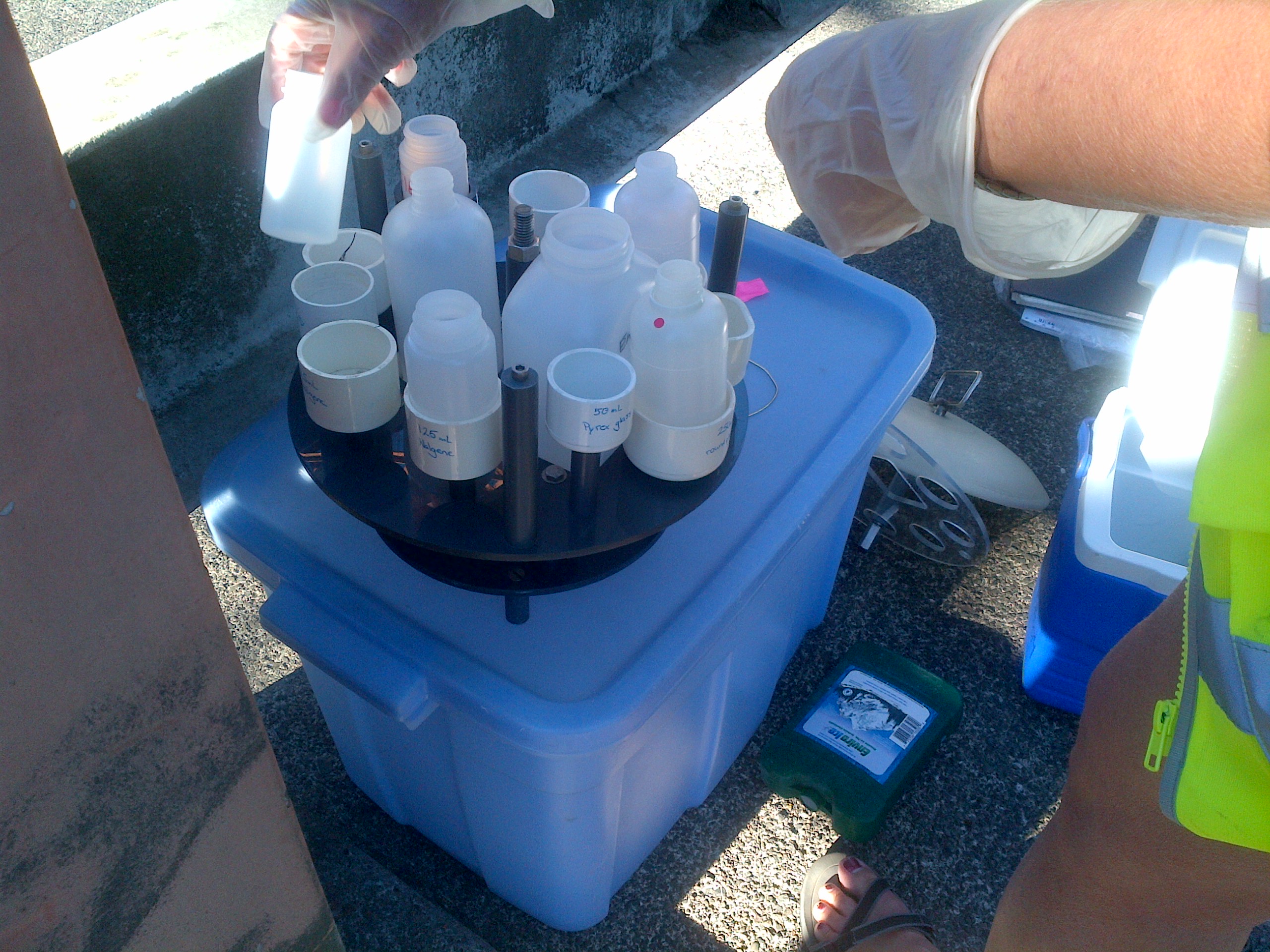
- “fix” the samples with the different additives provided so samples don’t deteriorate enroute to a licensed laboratory in Burnaby,
- properly pack coolers provided by ECCC with sample bottles and ice packs and courier them to the laboratory,
- fill out the analysis request forms and chain of custody for the laboratory.
Volunteers lower a rack containing sample bottles from the bridge into the river to fill the bottles with river water. The analysis include:
- total and dissolved metals;
- nutrients like nitrates and phosphates;
- physical characteristics like turbidity, dissolved solids, hardness, conductivity;
- E. coli and other coliforms.
The mainstem of the Kw’a’luxw does not appear to have serious water quality problems except for high turbidity when there is a collapse on the Clay Banks upstream, a natural phenomenon.
Community Flow Monitoring Network
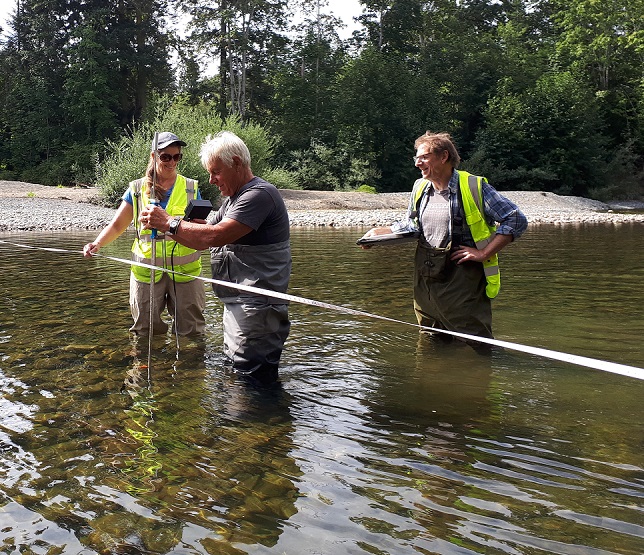
For over a decade, MVIHES volunteers have been measuring flow volumes in the Kw’a’luxw watershed and sharing the data with the local governments and the Province. Flow measurements are important for determining if a creek or river has sufficient flow for sustaining fish in the summer or if intervention is required. Our work has led to the City of Parksville installing a hydrometric station in Shelly Creek which provides real-time flow data we can access for keeping an eye on the water level in the creek
Hydrometrics is a complex science that involves a lot of effort and can be technically challenging. For that reason, the Aquatic Research and Restoration Centre run by the BC Conservation Foundation in Nanaimo has established the Community Flow Monitoring Network. Their mission is to assist community groups like MVIHES with the collection of robust scientific data through hands-on training, access to equipment, data sharing & interpretation, and technical support.
MVIHES is currently assigned to Nanoose Creek for stream flow monitoring: a different watershed but important all the same.
Monitoring Aquatic Insects
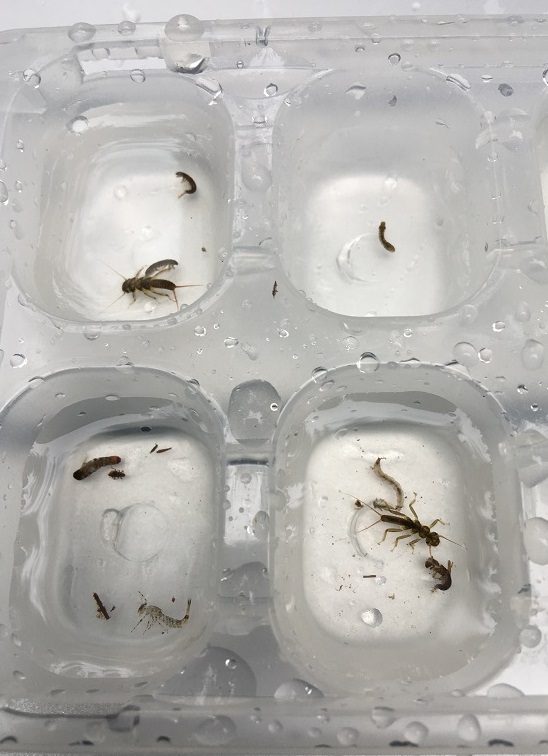
Did you know you can determine if a river has good water quality by the numbers and types of insects living on the river bottom? Another name for these insects is benthic invertebrates. Most of these invertebrates are the larval forms of flying insects that spend part of their life cycle in fresh water, like mosquitoes, black flies and dragon flies.
Category 1 species are those that are intolerant of pollution so the presence of a lot of these insects is an indicator of good water quality– like mayflies, caddis flies, stone flies, and riffle beetles.
Category 2 species are somewhat tolerant to pollution and include damsel flies, dragon flies, water snipes, and alder flies. If a location in the river has lots of Category 2 and 3 species and fewer Category 1 species, the water quality is acceptable.
Category 3 species are tolerant of pollution and include black flies, midge flies and water mites. If a river location have lots of these insects but fewer Category 1 and 2 species, the water quality is poor.
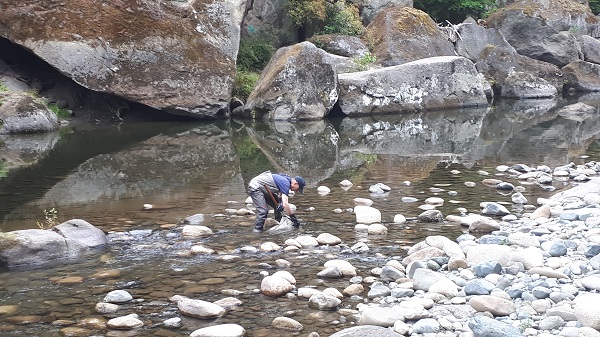
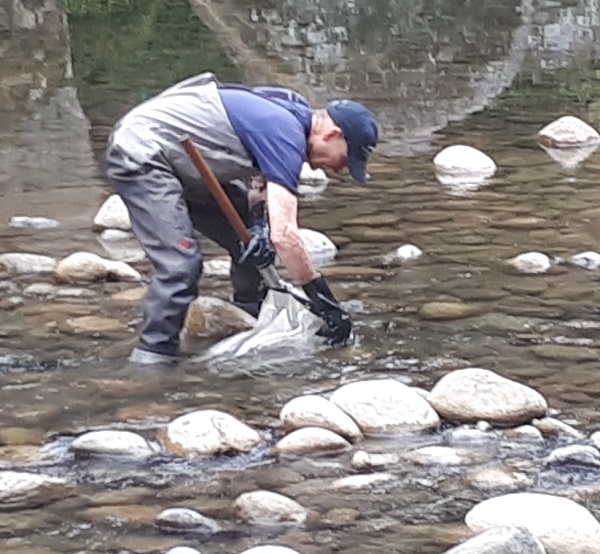
The latest benthic invertebrate survey in the Kw’a’ luxw was the Englishman River Invertebrate Assessment conducted in 2019 from just below the Englishman River Falls down to the Orange Bridge. Samples were collected by placing a D-shaped net on the stream bottom and kicking up the stream bottom to lift up benthic invertebrates which were captured in the net. The samples were taken to the shore where insects were sorted by species and counted.
The results indicated the river between the falls and the Orange Bridge has acceptable water quality. Several metrics showed improvement as sample sites moved up the river from the Orange Bridge, indicating that water quality improves with distance upstream from human influence.