

Restoring The Shelley Creek Watershed
The Shelly Creek Watershed Initiative by MVIHES is dedicated to restoring and preserving critical fish habitat for Coho Salmon and Cutthroat Trout in Parksville, BC.
Background
Shelly Creek is a vital tributary of the Englishman River, originating from Little Mountain in Parksville, BC. Spanning approximately 6.5 kilometers and draining a 5 square-kilometer watershed, the creek has faced significant habitat degradation due to urbanization and agricultural activity. Despite these challenges, Shelly Creek continues to serve as a critical refuge for resident Cutthroat Trout and migrating Coho Salmon, highlighting its ecological importance.
Fish Habitat and Migration
Shelly Creek provides a year-round habitat for resident Cutthroat Trout, particularly in areas below the E&N rail crossing. However, fish migration is hindered by various man-made obstructions that restrict their movement. Coho Salmon depend on the creek for spawning and rearing of fry as well as seasonal refuge from the high winter flows of the Englishman River. As temperatures rise in the summer and oxygen levels decrease, these salmon migrate back to the Englishman River to continue their life cycle. The creek’s role in supporting both species emphasizes the need for habitat conservation and restoration.
Monitoring and Restoration Programs
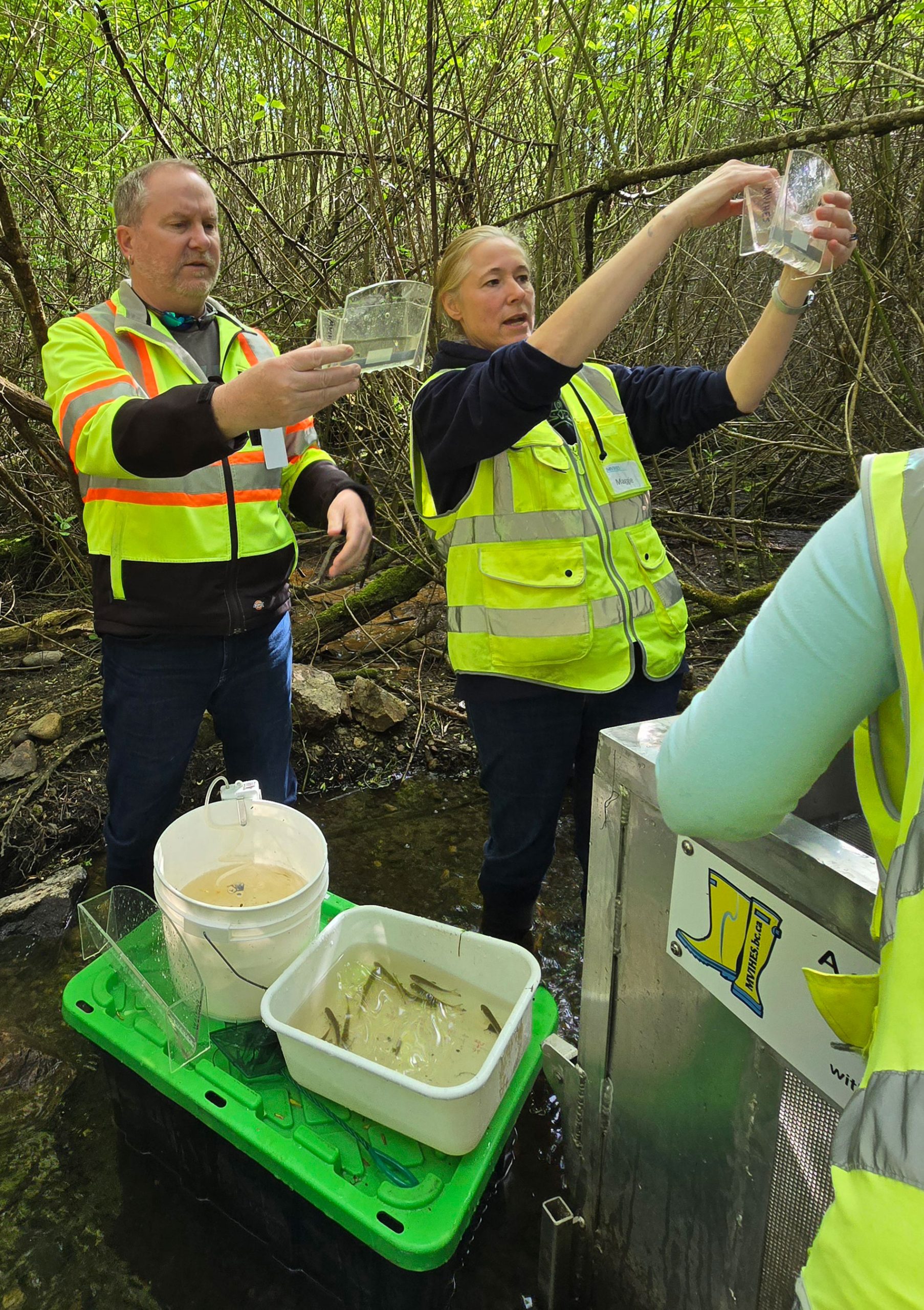
Since 2011, the Mid Vancouver Island Habitat Enhancement Society (MVIHES) has implemented a monitoring program to track juvenile Coho migration. A smolt trap installed upstream from the confluence with the Englishman River has provided valuable data on Coho Salmon populations. Findings indicate that as many as 8,094 Coho smolt have overwintered in Shelly Creek before migrating downstream, reinforcing the creek’s significance as a salmon-supporting habitat.
Habitat Assessments and Findings
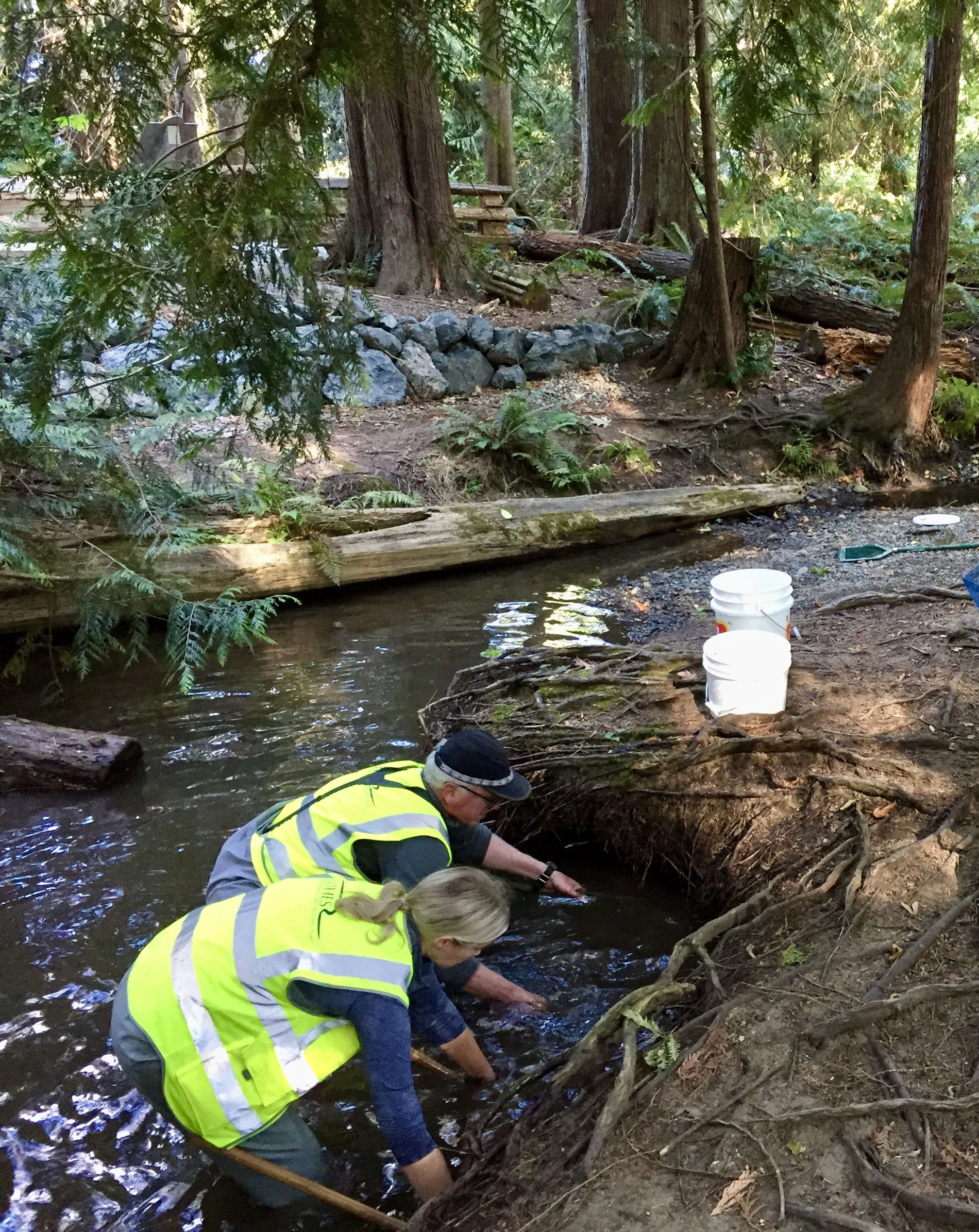
As part of the Watershed Health and You program, an instream fish habitat assessment was conducted in 2014. Volunteers trained by Fisheries Biologist Dave Clough utilized the Urban Salmon Habitat Program (USHP) methodology to evaluate habitat conditions and compare them to a similar study conducted in 1999. The results revealed significant habitat degradation, including:
- A 50% decrease in pools and fish cover
- Increased sedimentation covering vital spawning gravel
- Stream bank erosion and fish passage obstructions
- Man-made modifications altering natural hydrology
In response, MVIHES partnered with North West Hydraulics to develop habitat enhancement strategies, leading to targeted restoration efforts in 2015.
Restoration Efforts
The 2015 restoration initiative focused on stabilizing the creek and enhancing fish passage. Key restoration actions included:
- Reinforcing stream banks with rock to prevent erosion
- Constructing weirs to create fish habitat pools
- Adding spawning gravel to improve breeding conditions
- Installing a sediment settling pond upstream of a culvert
- Raising the creek bed to facilitate fish migration through a perched culvert
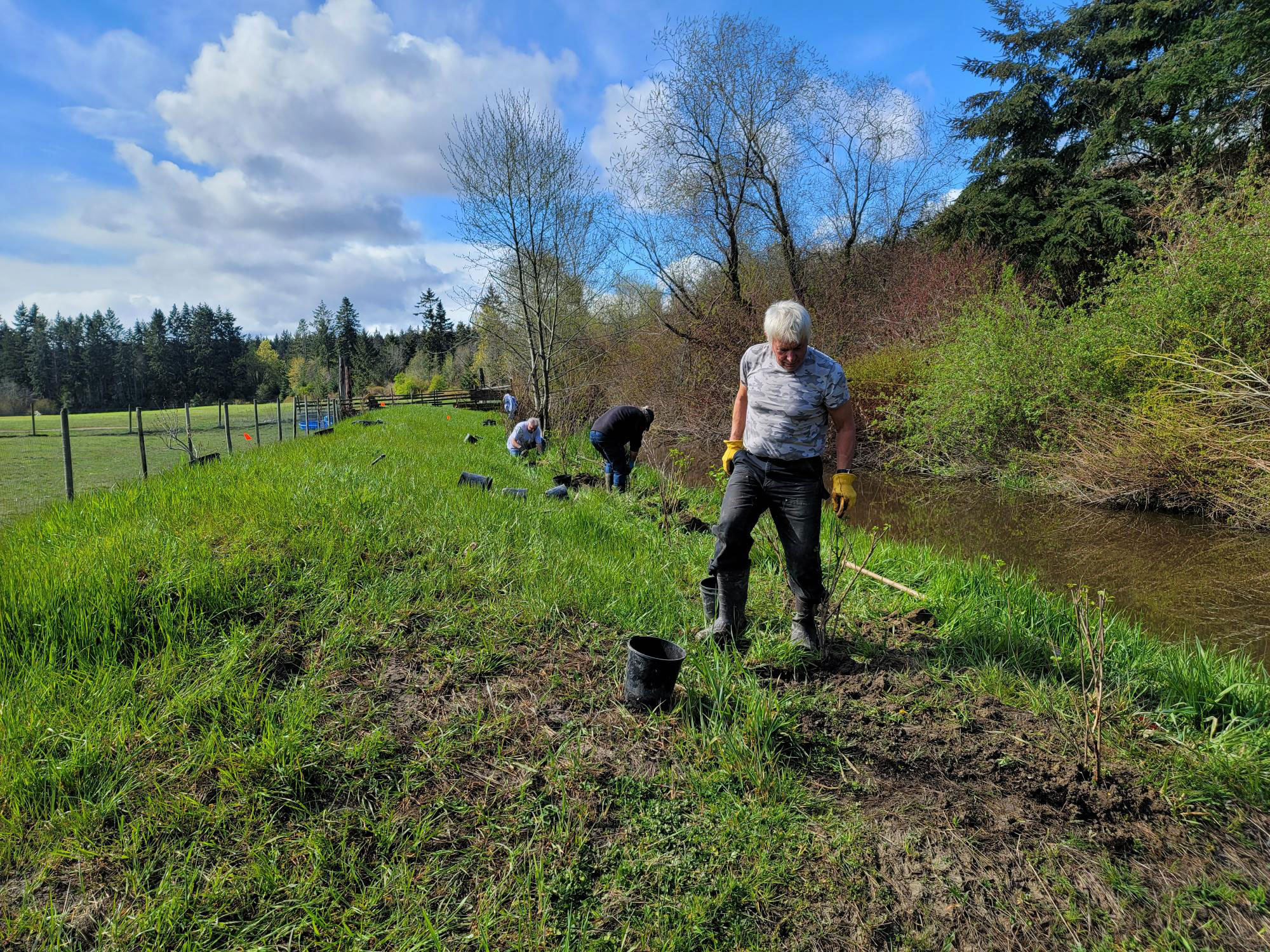
In March 2016, volunteers further supported these efforts by planting native species such as cedar, sword ferns, salmonberry, and red osier dogwood to stabilize disturbed areas. Additional assessments conducted in the upper section of Shelly Creek in 2015 identified significant excavation activities that disrupted the natural hydrology of the watershed.
Addressing Hydrological Challenges
Recognizing the need for hydrological restoration, MVIHES enlisted water engineering expert Jim Dumont, P.Eng., to conduct a comprehensive study. His findings were compiled in the Shelly Creek Water Balance and Sediment Reduction Plan, Technical Summary, which provided crucial recommendations to mitigate hydrological disturbances. Following this report, MVIHES hosted two Water Stewardship Symposiums to develop strategies for restoring natural creek functions and improving water quality.
Additional Restoration and Conservation Activities
Beyond direct habitat restoration, MVIHES has spearheaded various conservation initiatives:
- Invasive Species Removal: In 2016, volunteers eradicated a colony of Yellow Iris, an invasive plant that posed a significant threat to fish habitat.
- Scientific Research: In 2018, a Vancouver Island University student conducted a study analyzing the diet of Shelly Creek’s Cutthroat Trout population, contributing valuable insights to the creek’s ecological health.
- Community Reforestation: In 2019, volunteers and local residents participated in a reforestation effort, planting ferns, trees, and shrubs along the creek banks to enhance habitat quality and stabilize the riparian zone.
- Sediment Removal and Creek Bed Restoration: 2020 – 2022, over 40 dump truck loads of sediment were removed from Martindale Pond (a rearing pond on the creek) and a 600 m long section of creek. 70 cubic yards of gravel and cobble were added to the creek bed and 2 more rearing ponds created. Thousands of native trees and shrubs have been planted in the restored section in a partnership with the Snaw-naw-as First Nation.
Looking Ahead
MVIHES remains committed to the long-term restoration and protection of Shelly Creek. Through continuous monitoring, community engagement, and scientific research, efforts will persist to address key habitat and hydrological challenges. By restoring natural processes and mitigating human-induced impacts, the initiative seeks to ensure that Shelly Creek remains a thriving refuge for Coho Salmon and Cutthroat Trout for generations to come.