


Forage Fish Habitat Protection with MVIHES
Understanding Forage Fish and Their Importance: The Cornerstone of Ocean Food Webs
Forage fish are small fish that travel in large schools and serve as a vital food source for larger marine species. Pacific herring, Pacific sand lance, and surf smelt are among the most important forage fish in the coastal ecosystems of British Columbia. They form the foundation of the marine food web, sustaining populations of Humpback Whales, porpoises, sea lions, seals, salmon, and marine birds.
The health of these fish populations directly impacts the survival of larger marine predators, making their protection essential for maintaining a balanced and thriving ocean ecosystem.
The Critical Role of Spawning Beaches
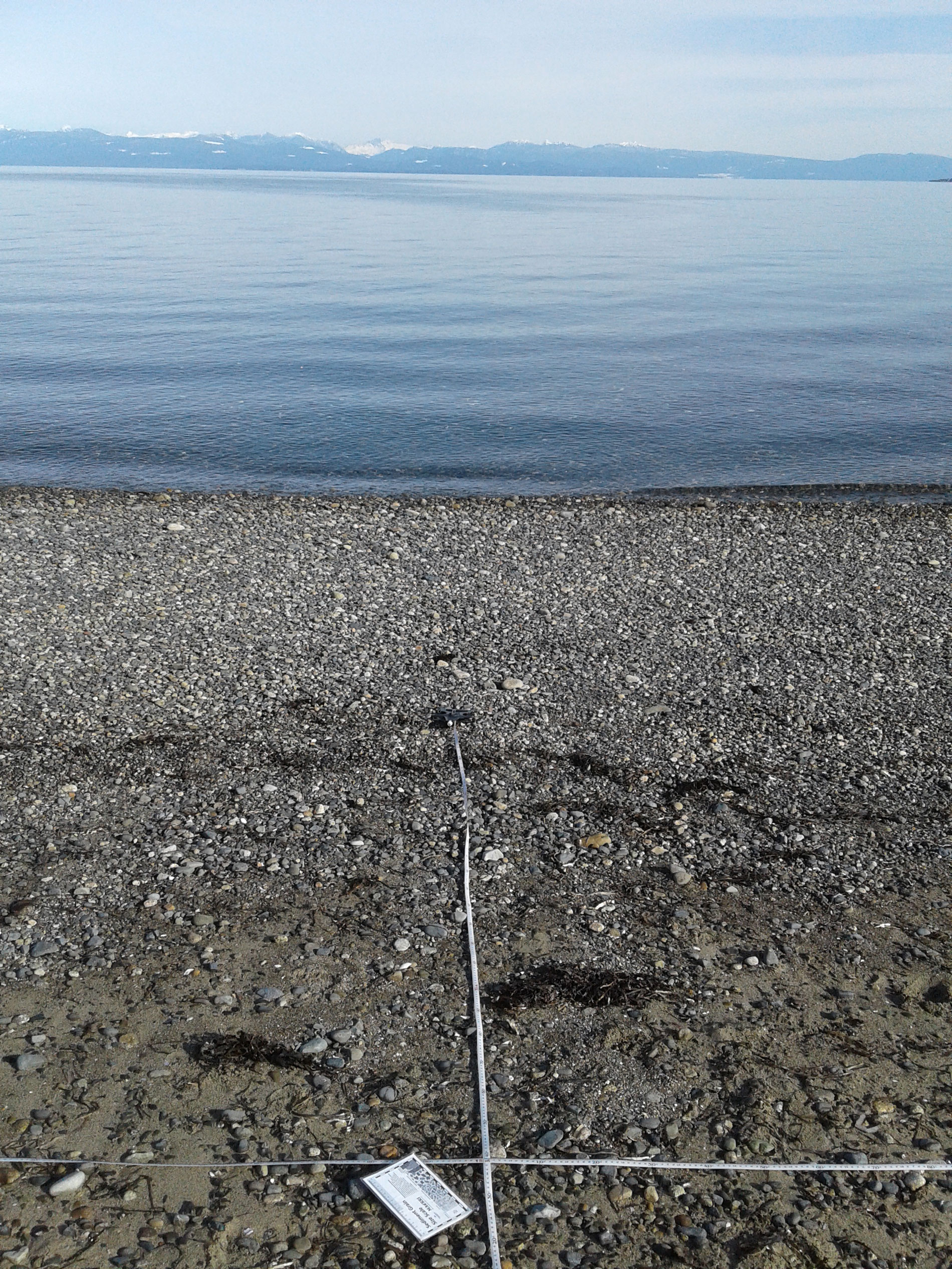
Forage fish, such as surf smelt and Pacific sand lance, have a unique spawning behavior. They lay their tiny, 1mm eggs on specific beaches within the intertidal zone—just below the high-tide line, where sand and pebbles provide ideal incubation conditions.
These spawning beaches are crucial to the survival of forage fish populations, yet they are vulnerable to human activity. Shoreline development, recreational use, and environmental changes can disturb or destroy these fragile habitats, disrupting the life cycle of forage fish and, consequently, the entire marine food chain.
Recognizing this, conservation groups like the Mid Vancouver Island Habitat Enhancement Society (MVIHES) have taken action to identify, map, and protect these spawning areas.
MVIHES’s Forage Fish Monitoring Program
Since 2018, MVIHES has been actively identifying and sampling forage fish spawning habitats along the coastline from Craig Bay to Columbia Beach in French Creek. By studying these habitats, MVIHES can ensure their protection during the critical spawning season.
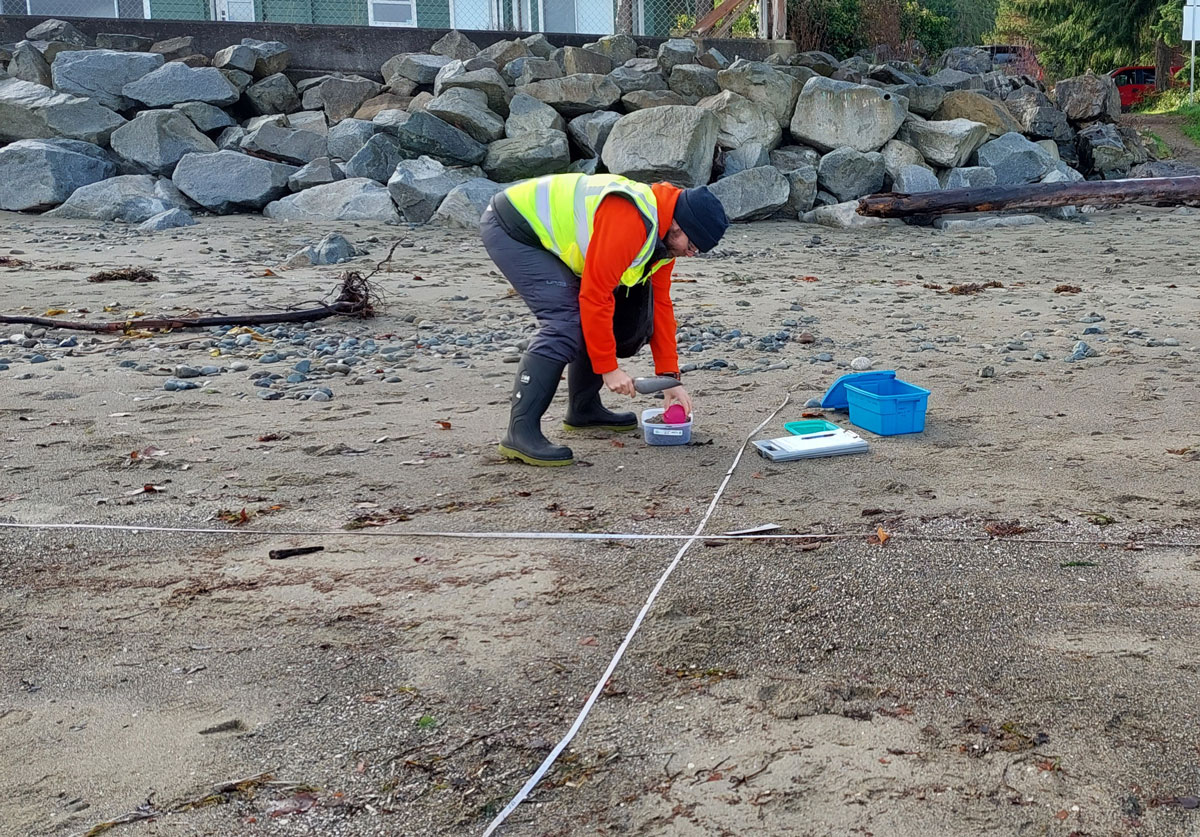
It has been suggested that Pacific sand lance prefer to spawn during full and new moons, when high tides reach their peak and provide maximum spawning area. To monitor this behavior, MVIHES volunteers conduct beach surveys during low tide, collecting sand and gravel samples to check for eggs.
Ongoing Habitat Assessments and Findings
- Monthly: MVIHES volunteers collect habitat data and sand samples from 11 potential spawning sites.
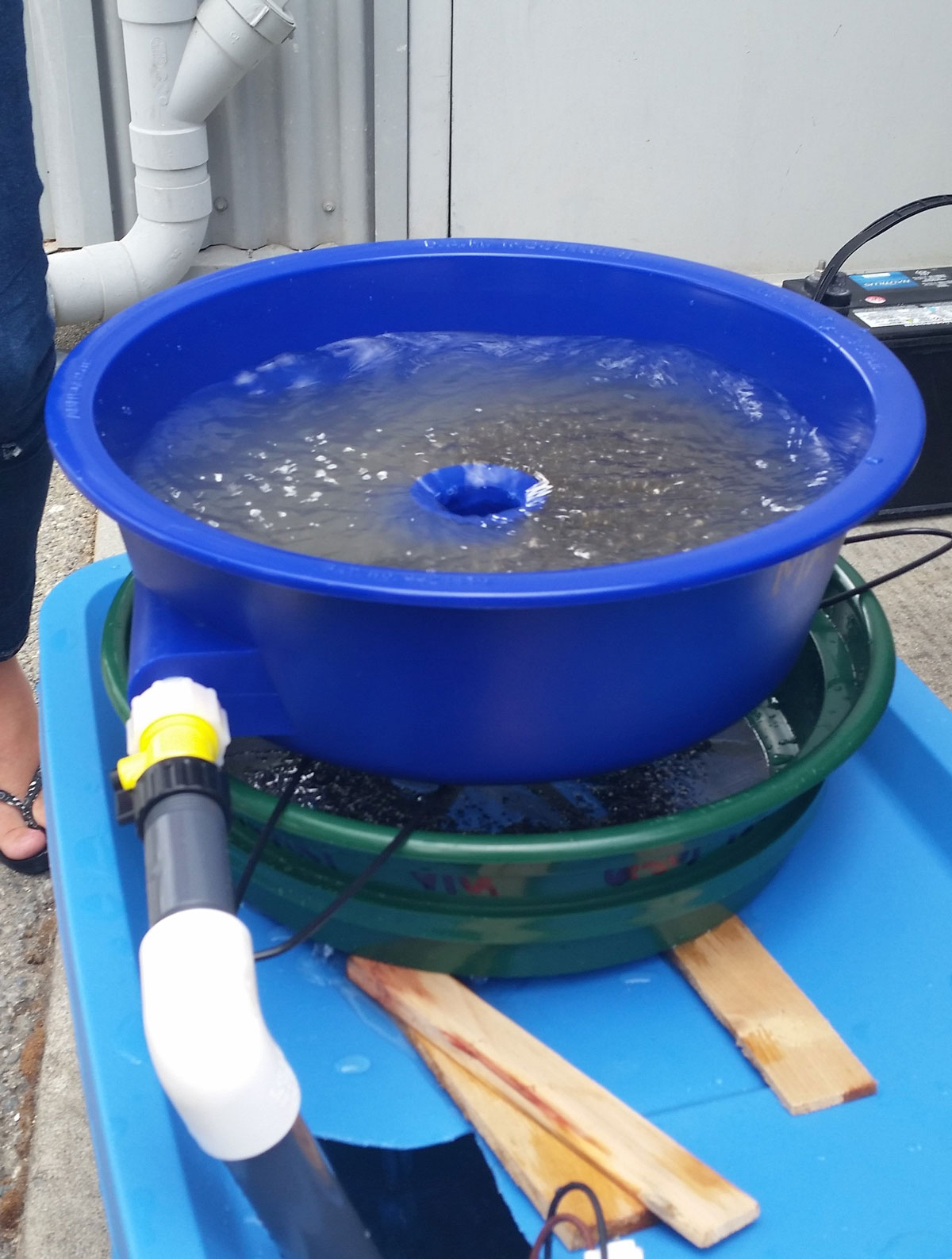
- The sand samples are carefully sieved and “vortexed” to separate the right-sized grains where forage fish eggs and embryos attach.
- Sorted samples are placed in labeled bottles and sent to Vancouver Island University (VIU) and the Mount Arrowsmith Biosphere Region Research Institute (MABRRI) for microscopic analysis.
These assessments have produced significant findings over the years:
- December 2018 & 2019: Pacific sand lance eggs were identified in samples collected from San Pareil Beach, confirming it as a key spawning site.
- 2020: Eggs were discovered on the beach in Parksville Community Park. The microscopic images, analyzed by MABRRI, showed five sand lance eggs attached to sand particles. The samples were verified by experts at the Department of Fish and Game in Washington State.
- 2021 to present: Pacific sand lance eggs were found at multiple locations, including:
- Craig Bay
- Parksville Community Beach
- Rathtrevor Provincial Park
- French Creek Marina
- San Pareil (continuing to be the most productive spawning site)
Protecting Spawning Habitats from Human Impact
The protection of forage fish spawning beaches is crucial, as these habitats are at risk due to human activity. Shoreline modifications, such as seawalls, dredging, and coastal construction, can alter the natural movement of sand and pebbles, making spawning impossible.
MVIHES’s monitoring program not only helps identify critical spawning areas but also raises awareness about the need for conservation efforts. By mapping these habitats, MVIHES ensures that local authorities and conservationists can take steps to mitigate potential threats.
How You Can Help
Community involvement plays a key role in protecting forage fish and their spawning habitats. Here are some ways you can help:
- Avoid disturbing intertidal zones by staying off spawning beaches during peak seasons.
- Support habitat-friendly shoreline development by advocating for natural beach preservation.
- Participate in conservation efforts by volunteering with organizations like MVIHES.
- Educate others about the importance of forage fish and their role in the marine ecosystem.
Looking Ahead
MVIHES continues its mission to protect forage fish habitat through ongoing research, monitoring, and community engagement. By ensuring the health of spawning beaches, they contribute to the overall stability of marine food webs, benefiting not just forage fish but the entire coastal ecosystem.
For more details and insights, check out the article by MVIHES member Ross Peterson featured in PQB News.
By working together, we can safeguard the essential habitats that sustain our ocean’s wildlife for generations to come.