
A Weekend of Learning and Action
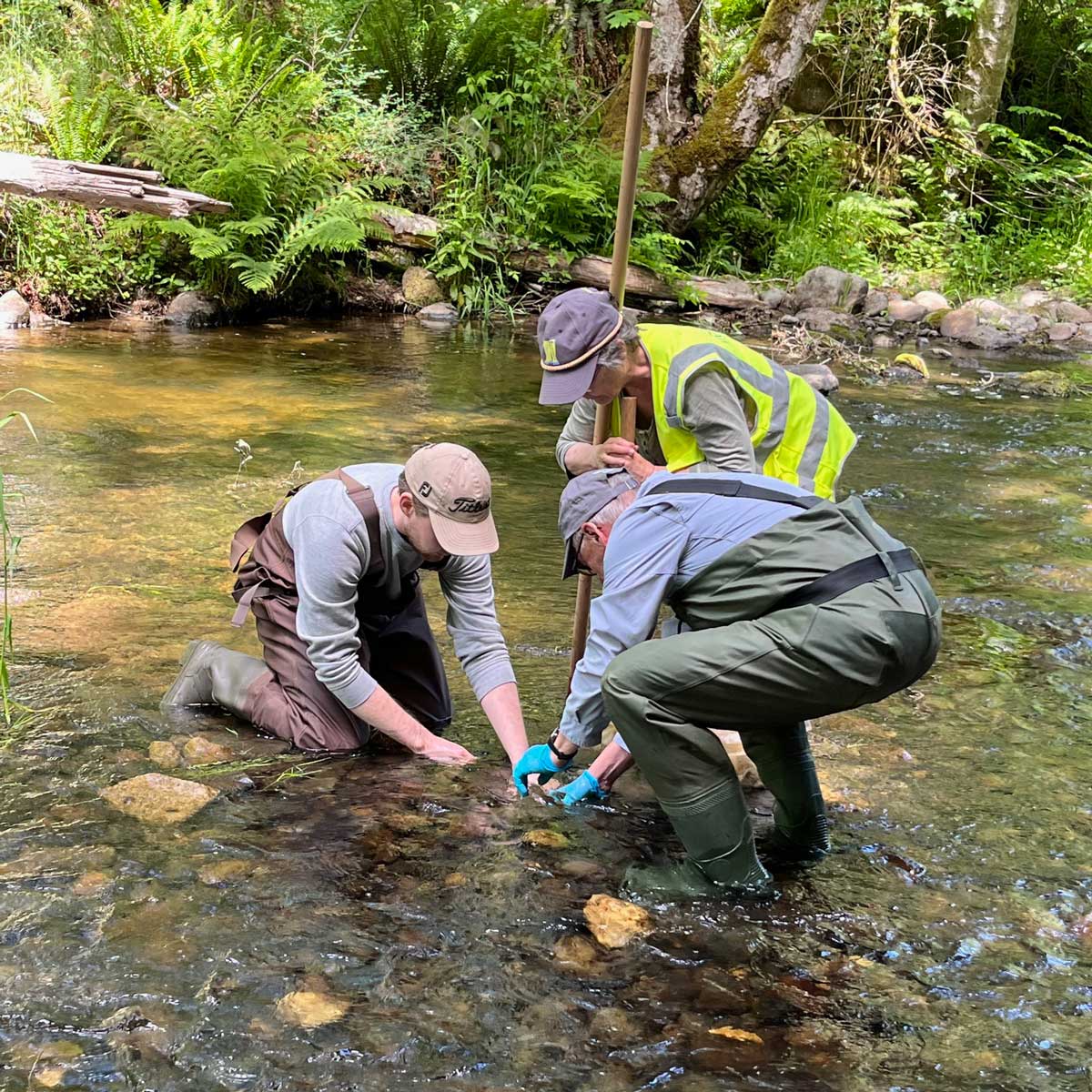
One gorgeous weekend in June, seventeen passionate volunteers came together at French Creek to take part in a Streamkeeper Course. Hosted by the Pacific Streamkeepers Federation, this course provided hands-on training in assessing fish habitat and stream health. The program is designed to empower local communities with the knowledge and skills needed to protect and restore freshwater ecosystems.
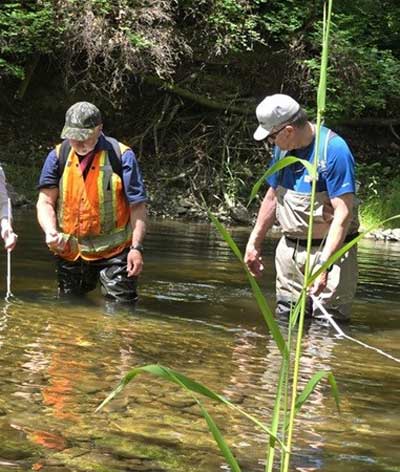
Dedicated volunteers learning the ropes of stream assessment.
Classroom Knowledge Meets Real-World Practice
Led by expert instructor Michele Jones of Mimulus Biological Consultants, the course began with a few hours of classroom instruction at the Parksville Community Centre on Mills Street. Volunteers then took their newfound knowledge to the field, applying what they had learned to French Creek.
The fieldwork involved taking precise measurements of water depth, creek width, oxygen levels, and streambed composition. Volunteers also assessed the number and size of pools and riffles—crucial habitat features for fish and aquatic life.
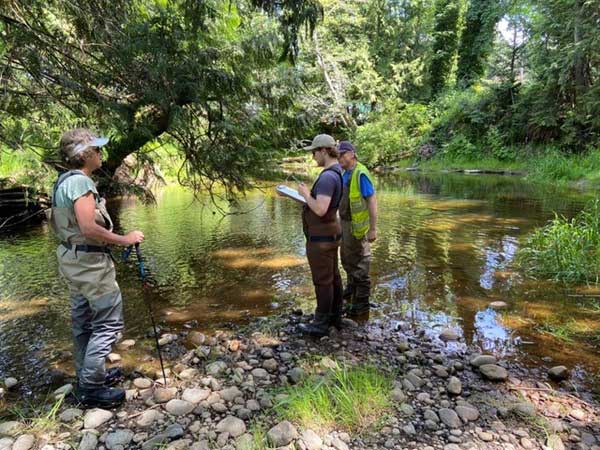
Volunteers carefully record data to evaluate the health of French Creek.
Studying Aquatic Life: A Window into Stream Health
One of the most exciting parts of the training involved collecting aquatic insects from the creek bottom. These tiny creatures play a vital role in assessing stream health. Certain species, such as May Fly nymphs, Stone Fly nymphs, and Caddis Fly larvae, are indicators of clean water, while the presence of other organisms can signal pollution.
The volunteers arrived at French Creek just in time for a May Fly hatch, discovering countless tiny newborn May Fly nymphs among their samples. Their findings, along with other data collected, provided an essential snapshot of the stream’s overall health.
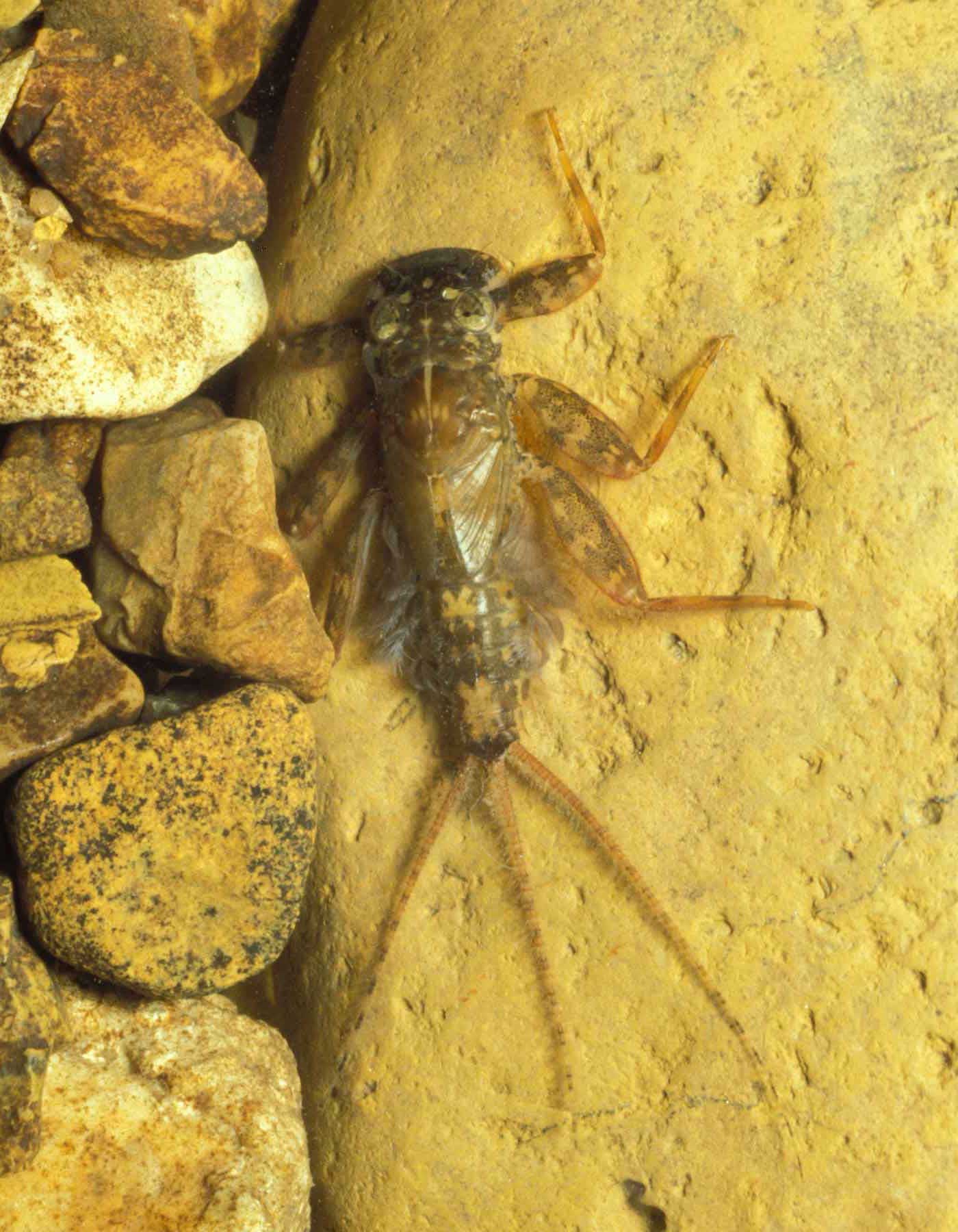
A microscopic look at a May Fly nymph, one of the many tiny creatures found in French Creek.
The Importance of Creekside Vegetation
Beyond the water itself, the volunteers also examined the surrounding creek banks. Vegetation plays a crucial role in stabilizing the banks, providing shade, and creating shelter for young fish. Tree roots, logs, and overhanging plants are essential for protecting fish from predators and maintaining a balanced aquatic environment.
Protecting the Environment Through Best Practices
Before wrapping up their fieldwork, the volunteers took extra precautions to prevent the spread of aquatic diseases. All boots, chest waders, and equipment were rinsed in a 10% bleach solution—a simple but critical step to stop the spread of harmful organisms like didymo (commonly known as rock snot) and whirling disease.
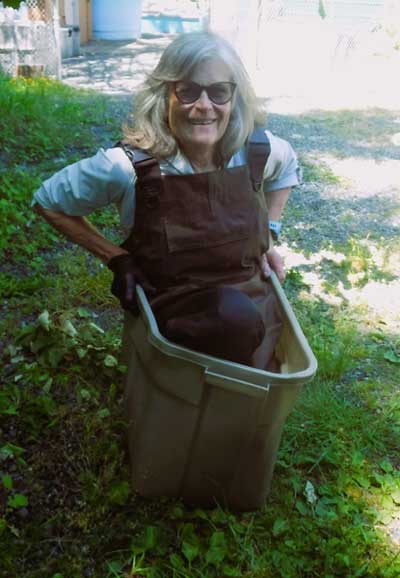
Volunteer Gene Gapsis ensures all gear is properly cleaned to protect other waterways.
A Job Well Done: Scoring French Creek’s Habitat
The final step of the training involved bringing field data back to the classroom to complete formal assessment sheets. These sheets assigned scores to various aspects of the creek’s habitat, providing an objective evaluation of its overall health. The good news? The section of French Creek assessed received an “Acceptable” fish habitat rating, thanks in part to conservation efforts like this one.
Finalizing assessments based on field data collected at French Creek.
Celebrating the Volunteers’ Achievements
After a weekend of hard work, the volunteers officially graduated from Streamkeeper School. Their dedication and enthusiasm were evident throughout the training, and they left with a deeper understanding of how to care for local waterways.
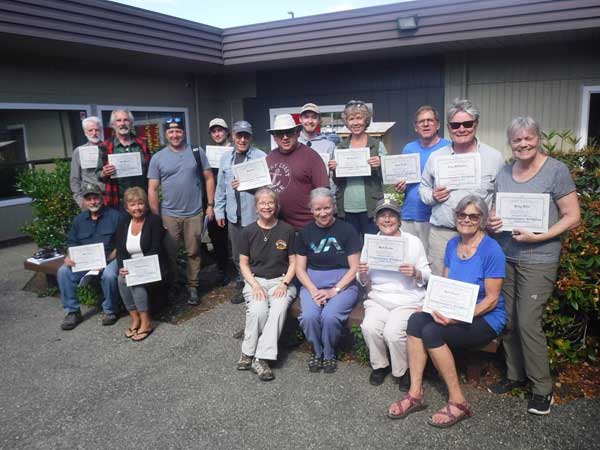
A proud group of newly trained streamkeepers, ready to make a difference! Starting at the back, from to left to right, are: Glen Stedham, Bob Williams, Chris Alexander, Matthew Stoltz, Ed Wasiak, Paul Sim, Logan Pike, Liz Campbell, Chris Smith, Craig McFadyen, Kathy Miller. In the front from left to right are Mark Hogg, Darlene Norring, Michele Jones, Kelly, Barb Riordan, Gene Gapsis. Missing in action: David Belitsky
A huge thank you goes out to instructor Michele Jones, the Qualicum Beach Streamkeepers for their financial support, and the Parksville Qualicum Fish and Game Association for providing access to facilities at the Marion Baker Fish Hatchery. This invaluable training was made possible by a generous grant from the Pacific Salmon Foundation.
Get Involved!
If you’re inspired by the work of these volunteers and want to make a difference in your local streams and rivers, consider joining a Streamkeeper Course or volunteering with local conservation groups. Together, we can protect and restore our precious waterways for future generations!
Special Thanks to: