

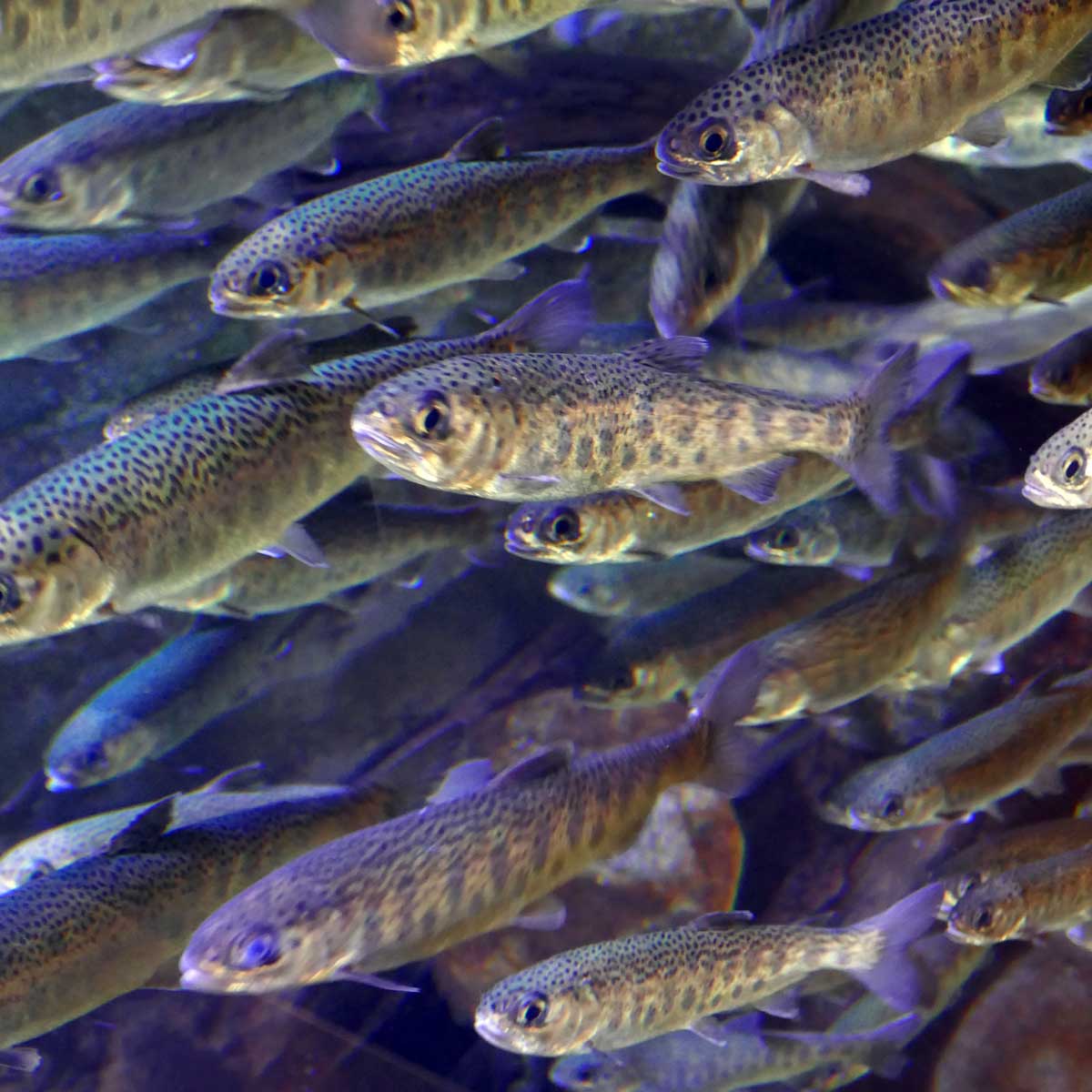

Bridging the Problem: How Runoff Reaches Salmon Habitat
One of the key insights into how 6PPD-quinone enters waterways is the presence of stormwater drains on many bridges crossing creeks and rivers. These drains, in effect, function as direct conduits for contaminants. When vehicles travel across bridges, tiny particles from tires wear off and accumulate on the roadway. Then, when it rains, those particles—and the 6PPD-quinone they contain—are washed over the drains and directly into the waterways below.
These direct-to-water drains pose a significant risk to salmon-bearing streams, because the chemical-laden runoff often has little chance for filtration or dilution before it reaches fish habitat. Where traffic is high, or the creek is small, the effect can be devastating.
Ongoing Research and Community Efforts
Fortunately, community organizations, research institutes, and local volunteers have banded together to tackle this issue head-on. The British Columbia Conservation Foundation (BCCF) has partnered with stewardship groups on the east coast of Vancouver Island to determine the extent of 6PPD-quinone in local streams. Their focus is on waterways used by salmon populations, as these fish have proven particularly vulnerable to the chemical.
The Mid Vancouver Island Habitat Enhancement Society (MVIHES) has been central to this collaborative effort. Since 2022, MVIHES volunteers have been out collecting water samples from points downstream of bridges in the Parksville area. These sampling events target periods when rainfall follows a dry spell of at least 48 hours, since the first major flush of contaminants tends to contain the highest levels of pollutants.
Early Findings at the Orange Bridge
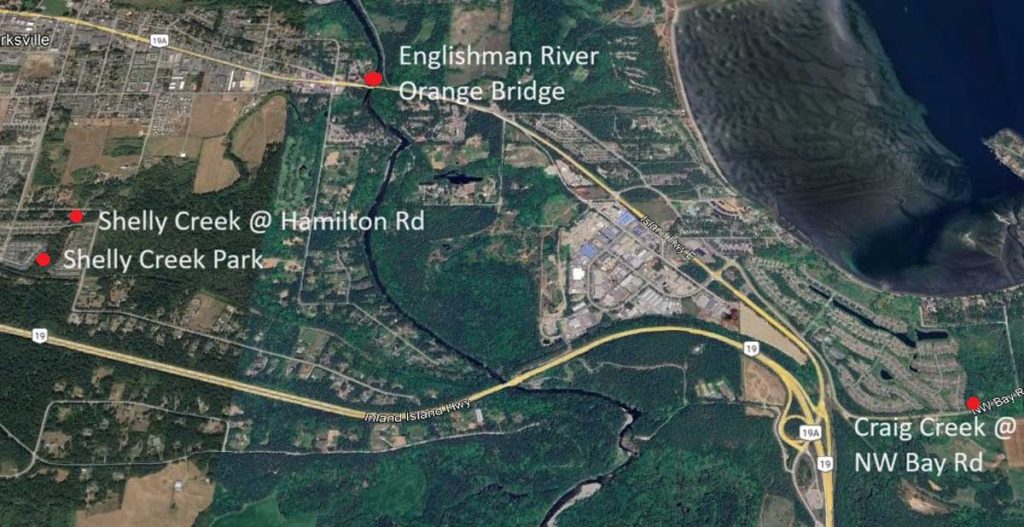
The first round of samples was collected at the Englishman River, just downstream of the Orange Bridge. Despite concerns, 6PPD-quinone was not detected in any of these early samples. Researchers suggest two likely reasons for this outcome. First, the Englishman River is relatively large, providing a high degree of dilution. Second, traffic across the Orange Bridge is significantly lighter than on some bridges in bigger urban centers, such as West Vancouver.
These results, though encouraging, did not mean the problem was resolved. Instead, it prompted BCCF and MVIHES to shift their focus in 2023 to smaller salmonid creeks where lower water volumes might lead to higher concentrations of toxins.
Testing in Smaller Streams: Shelly Creek and Craig Creek
In 2023, the monitoring team included Shelly Creek, where resident Cutthroat Trout occupy stretches within Shelly Creek Park, and a second downstream site near Hamilton Road. Craig Creek in Craig Bay, downstream of Northwest Bay Road, was also targeted. So far, Shelly Creek samples have come back with no detectable levels of 6PPD-quinone.
A different story emerged at Craig Creek. In one sample, volunteers found a trace amount of 6PPD-quinone—0.003 parts per billion, which is below the lethal threshold of 0.8 parts per billion for Coho Salmon. Additional samples from this creek showed no detectable concentrations. The prevailing theory is that these low or non-detectable levels are largely due to lower traffic volumes at the bridge crossings, reducing the overall load of tire-wear particles and, consequently, the amount of 6PPD-quinone.
What Happens When Rainfall Washes Across Our Roads?
Have you ever wondered what happens when rainfall washes across busy roads, bridges, and parking lots? The water flows into storm drains and eventually into local streams and rivers, but it carries more than just rainwater. Over the past few years, researchers have discovered a dangerous chemical that has been wreaking havoc on Coho Salmon populations in British Columbia: 6PPD-quinone. This toxin is now commonly referred to as the “Coho Killer,” and understanding how it gets into our waterways is critical to safeguarding fish habitat.
From Tire Preservative to Deadly Toxin
Most of us don’t think twice about the rubber beneath our cars, but tires have long been known to contain chemicals designed to prolong their life. One such preservative is 6PPD (N-(1,3-dimethylbutyl)-N’-phenyl-p-phenylenediamine). While 6PPD itself is helpful in preventing tire degradation, the trouble arises when it reacts with ozone in the air, transforming into 6PPD-quinone.
Researchers discovered this transformation during investigations into large-scale Coho Salmon die-offs, notably in places like Brothers Creek in West Vancouver and Piercy Creek in the Comox Valley. In these cases, dead or dying salmon were found shortly after heavy rains, and it was determined that 6PPD-quinone concentrations as low as 0.8 parts per billion were lethal to Coho Salmon. This phenomenon is now recognized as part of Urban Runoff Mortality Syndrome (URMS)—a disturbing occurrence in which a flush of stormwater, laden with toxins from roads and bridges, triggers a sudden spike in fish mortality.
Volunteers at Work
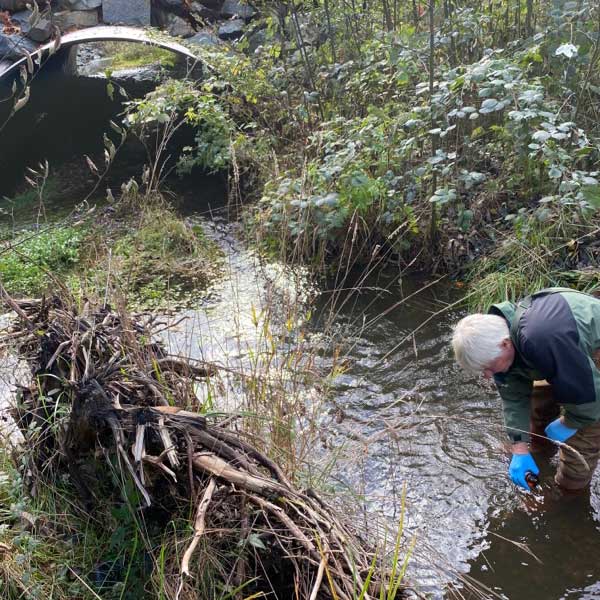
This monitoring project wouldn’t be possible without the unwavering commitment of volunteers like Dick Dobler, who was recently photographed preparing to collect a water sample from Craig Creek. Volunteer sampling requires careful procedures to ensure accuracy: bottles must be rinsed to avoid contamination, sampling must occur during target weather conditions, and precise data about rainfall, flow levels, and other factors are recorded.
Continuing the Fight Against the “Coho Killer”
As long as 6PPD remains an ingredient in tires, there will be a risk of 6PPD-quinone entering streams. However, ongoing monitoring is critical for identifying problem areas and guiding strategies to protect vulnerable salmon populations. Mitigation could eventually involve installing stormwater treatment systems, re-routing drainage, or even innovating new, fish-friendly tire formulas that do not produce harmful byproducts.
For now, groups like MVIHES and BCCF intend to continue testing at strategic locations, especially after rainfall events that follow dry periods. With each sampling, they gather more data that can help conservationists, municipalities, and policymakers make informed decisions.
Gratitude and Next Steps
The discovery of 6PPD-quinone and its lethal effect on Coho Salmon has been a call to action for many British Columbians. Thanks to dedicated volunteers, along with the leadership of organizations such as BCCF, MVIHES, and other local stewardship groups, we are steadily uncovering the extent of this emerging contaminant problem. Armed with these findings, local communities can work toward innovative solutions that keep our waterways safe for salmon and other aquatic life.
In the meantime, every new rainfall reminds us of the delicate balance between modern transportation and natural ecosystems. By staying informed, volunteering, and supporting research initiatives, we can all play a part in ensuring that our cherished salmon populations continue to thrive despite the challenges posed by this contaminant.