

The Good News
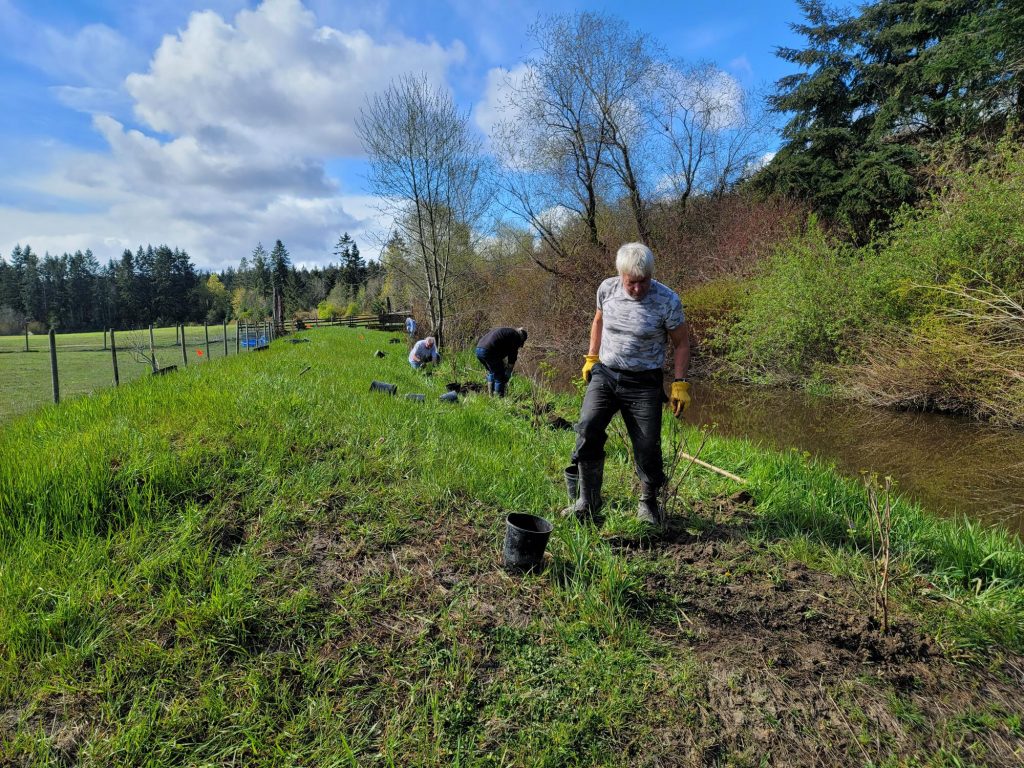
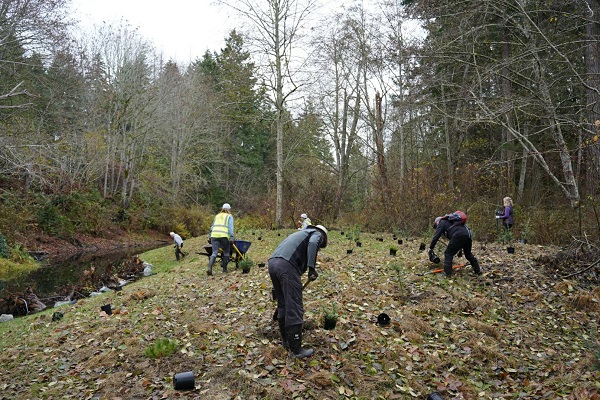
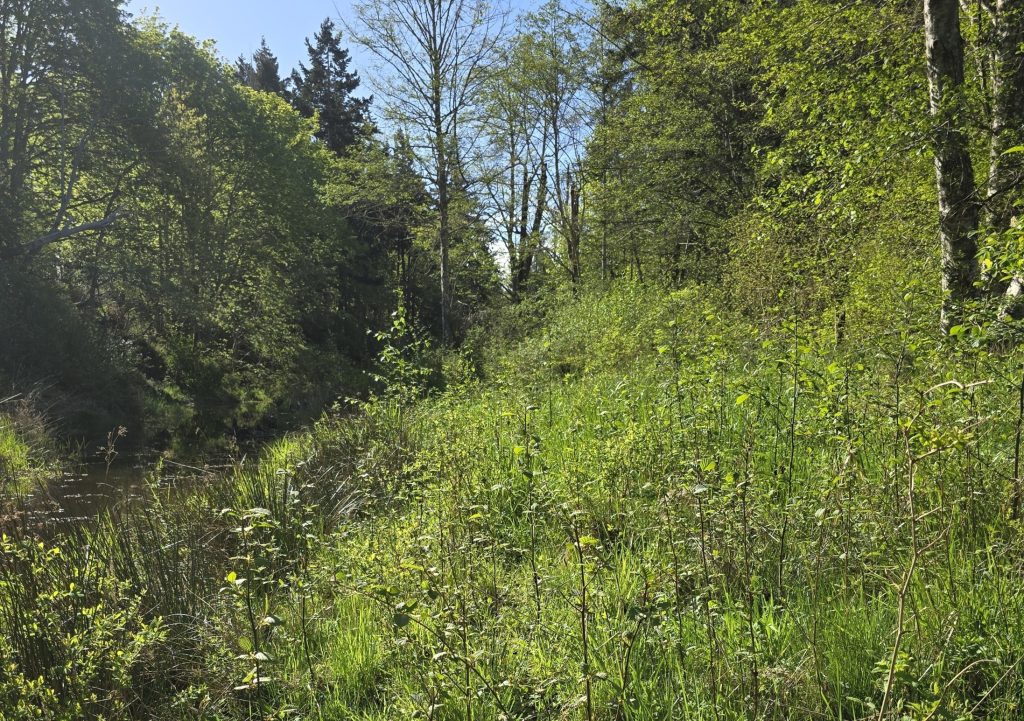
.Some great news from Shelly Creek! Two weeks ago, we checked on the trees and shrubs planted on a 600 m section of Shelly Creek that was restored in 2021 and 2022 on the Shelly Farm and a private property (thanks to funding from the Pacific Salmon Foundation). Members of the Snaw-naw-as First Nation and MVIHES undertook stream bank planting on the restored section in 2022, 2023, and 2024.
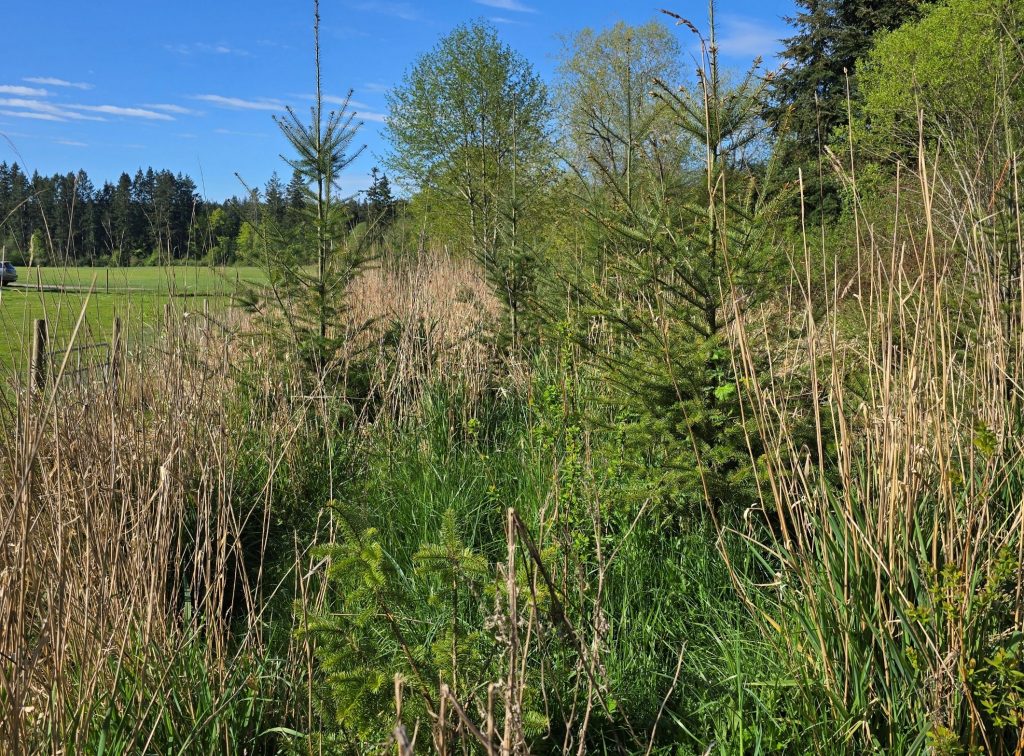
The Snaw-naw-as contributed over 2,000 trees and shrubs sourced from Streamside Native Plants. The photographs below highlight the healthy growth of various species, including salmonberry, hardhack, Nootka rose, red elderberry, willows, western red cedar, Douglas fir, and grand fir. Additional species are likely present, but the dense vegetation made navigation and identification challenging. That’s a good problem to have.
The Not-So Good News
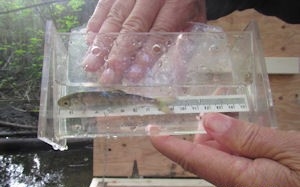
And now for some not-so-great news. As of May 4, we have only counted 161 Coho Salmon smolts in our smolt trap in Shelly Creek. We usually have counted several thousand by now, some that originate from Shelly Creek and some which entered the creek from the Englishman River to overwinter in a safe spot. We have not seen any fry.
We suspected there was a lack of spawners in the creek last fall from our PIT Tag data (part of the Salish Sea Survival Study by BC Conservation Society and Pacific Salmon Foundation). We detected PIT tagged spawners in Shelly Creek in the fall of 2023 and 2024.
In 2023, the City of Parksville installed a flow monitoring station in Shelly Creek. When we look at the stream flow data, we see that flow in fall of 2025 was half of that in fall of 2023 and less than half of that in fall of 2024. Could it be that there was not enough flow in 2025 to entice Coho spawners into the creek?
This appears to be a Shelly Creek issue since PIT tagged spawners were detected last fall in Centre Creek and fry are being spotted in the Englishman River this spring, including the Side Channel.
You can read all about the mysteries of the smolt counts of Shelly Creek since we began monitoring in 2011 in our latest report here